Friday, 3 November 2017
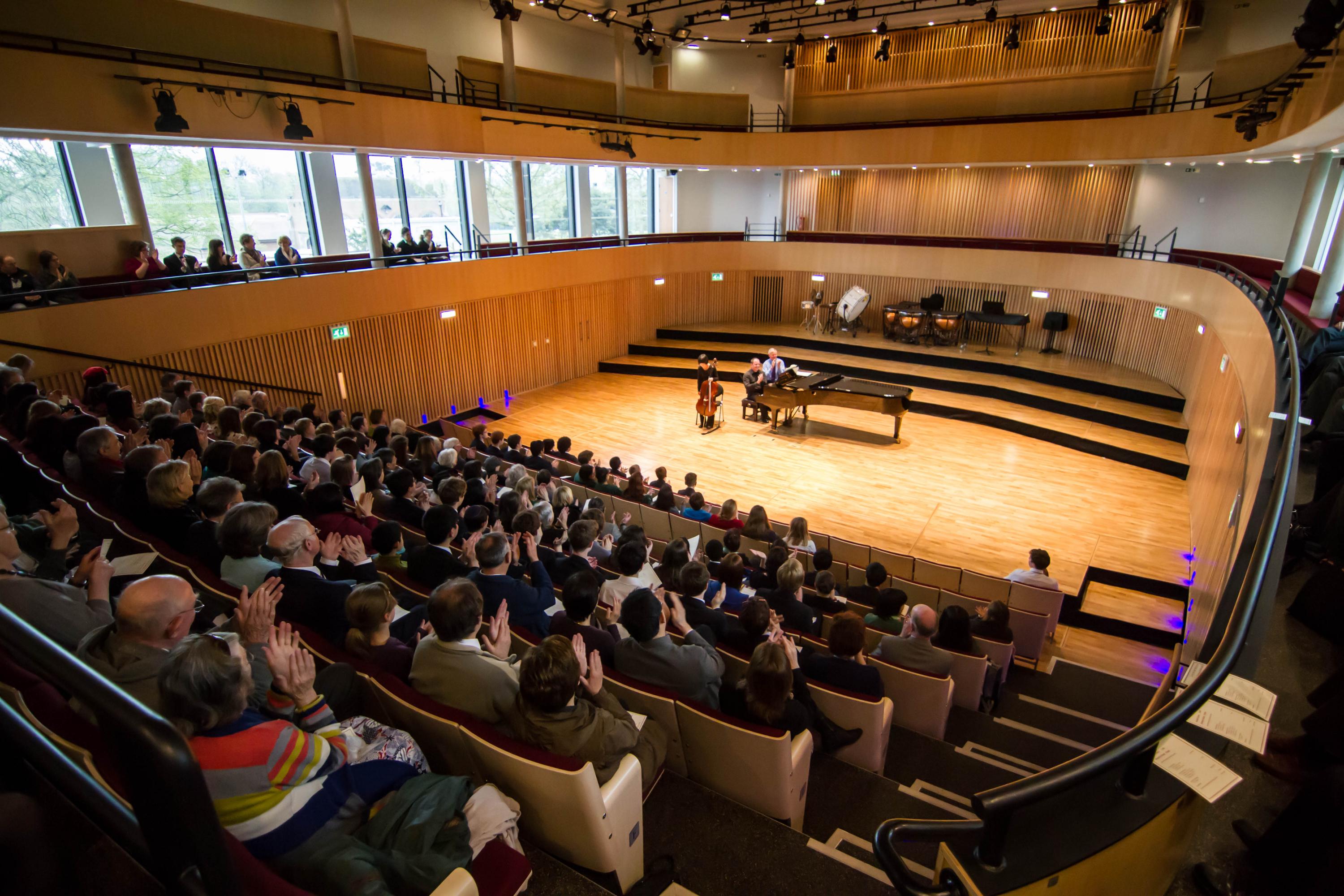
Ruddock Performing Arts Centre
Adam Romer, viola
Margaret Cookhorn, bassoon and contra-bassoon
Tom Redmond, horn
As a musician, I was delighted to find out that representatives of the CBSO would be coming to see us! When I was younger, I saw people from the CBSO on YouTube and they helped me massively with improving as a bassoonist. I enjoyed seeing the viola, the French horn and the bassoon and finding more about each of the instruments. I particularly enjoyed the bassoon duet as well as the tunes that we all knew on the French horn and some amazing pieces on the viola that had a lot of emotions – one moment happy, the next sad. It was great to explore how the French horn turned from a hunter’s horn to something as complicated as it is now and how the colour impacts the sound, how the bassoon and the contrabassoon can go really low and quite high as well and also how the viola can be plucked and bowed. I also learnt how all instruments make their sound: vibration, and how they make it, from reeds to bows to mouth buzzes. It was a really interesting and hard to beat Friday afternoon activity!
Ben Woodward (Shell)
Tuesday, 10 October 2017 at 18.30
Ruddock Performing Arts Centre
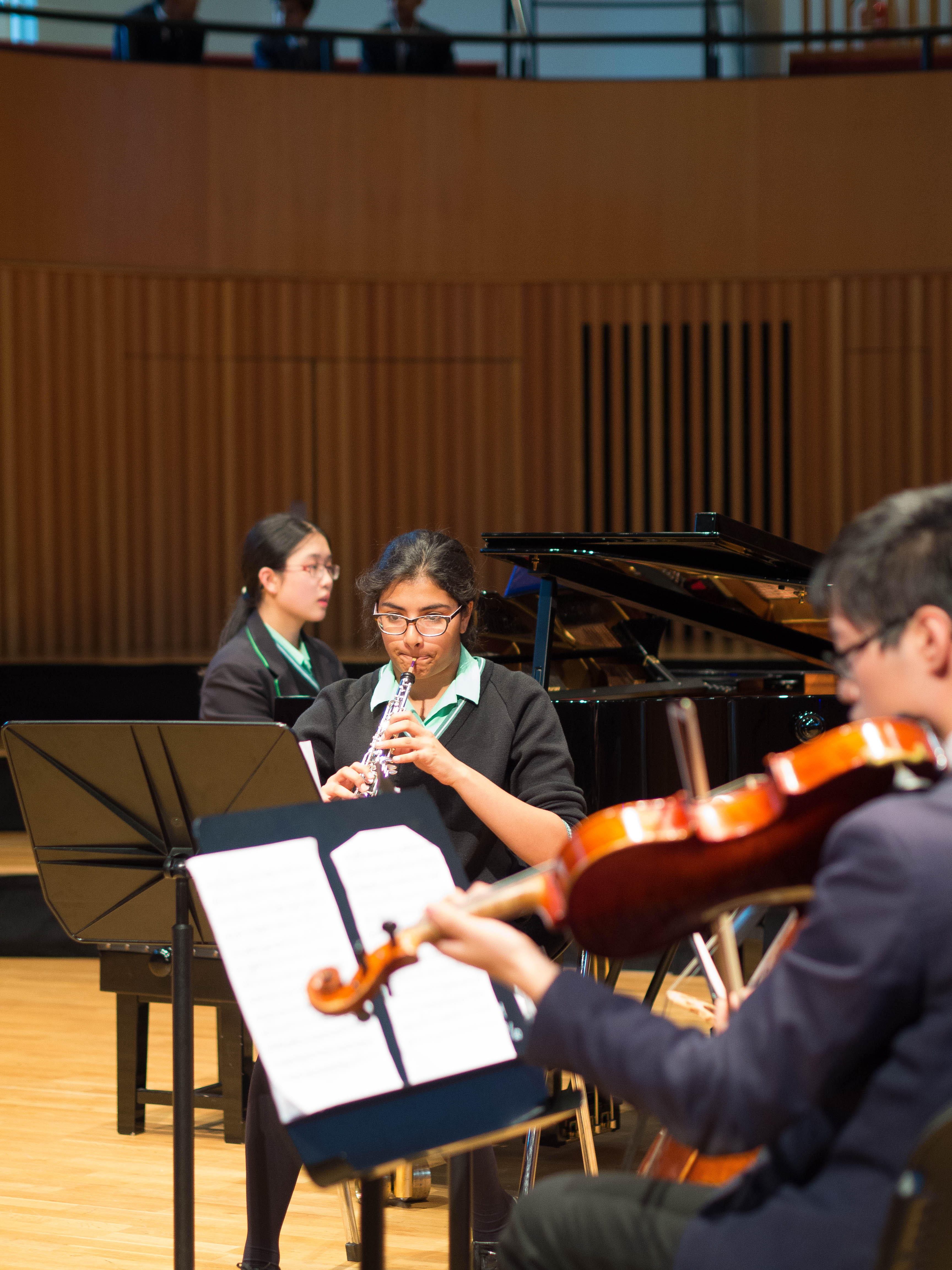
James Cleasby, clarinet
Nikita Jain, bassoon
Daniel Li, viola
Adam Mukoon, violin
Junias Wong, violin
Jessie Zhao, piano
Rick Zheng, cello
and a String Quartet who will perform a movement of Beethoven’s quartet op.18, no.3
This concert is presented jointly with King Edward VI High School for Girls
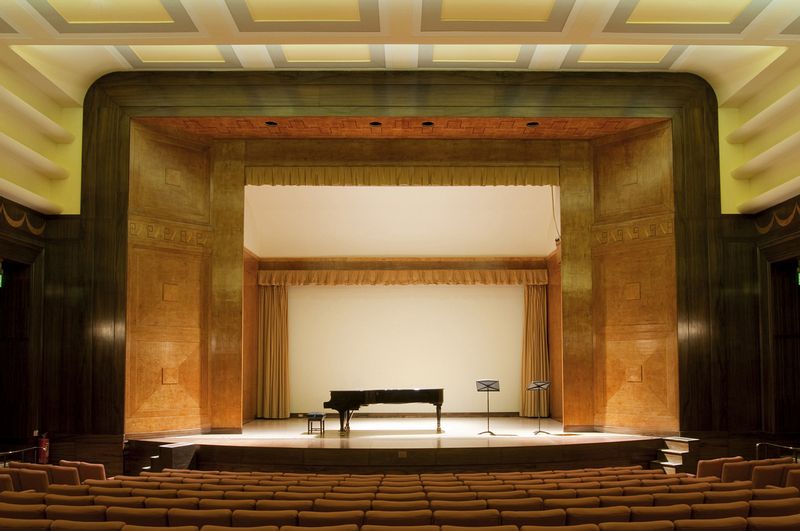
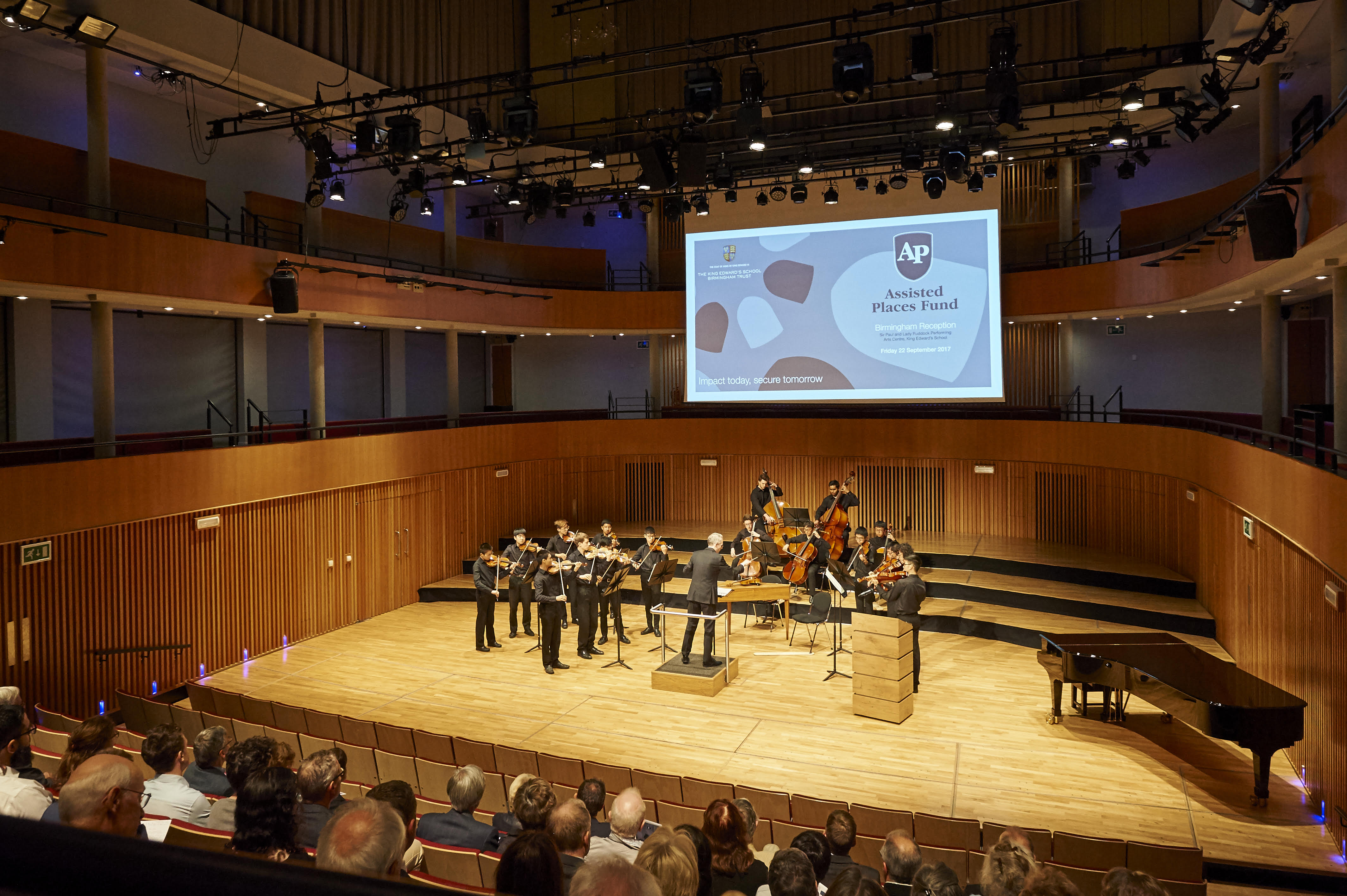
On 18th September, our AP100 ensemble performed during the launch of the King Edward’s School’s accessibility campaign in a bid to secure permanent need-blind admission to the school.
The programme was:
Arcangelo Corelli (1653-1713): Suite for string orchestra
i. Sarabanda
ii. Giga
iii. Bardinerie
Johann Pachelbel (1653-1706): Canon
Igor Stravinsky (1882-1971): Concerto in D
i. Vivace
ii. ARIOSO: Andantino
iii. RONDO: Allegro
Tom Coult: St John’s Dance (BBC commission: world premiere)
Ludwig van Beethoven: Piano Concerto No 3 in C minor
John Adams: Harmonium
Igor Levit, piano
BBC Proms Youth Choir
BBC Symphony Chorus
BBC Symphony Orchestra
Edward Gardner, conductor
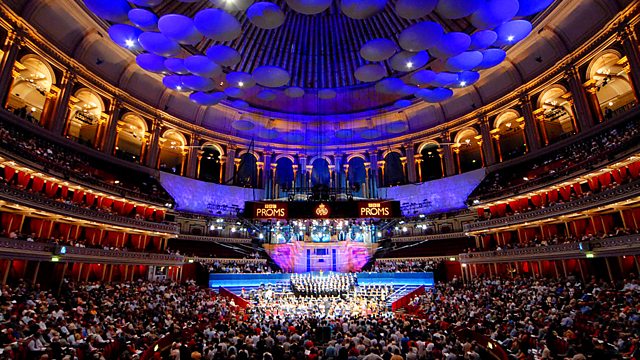
Richard Franklin, Haine Hock, Abhinav Jain, David Millross, and former King Edward’s boys sing Adams’s extra-ordinary Harmonium as part of the Proms Youth Choir in the first night of the Proms. The performance is a celebration of John Adams’s seventieth birthday this year.
The concert is in the Royal Albert Hall, and will be broadcast on BBC television and radio. You can read more on the BBC Proms website.
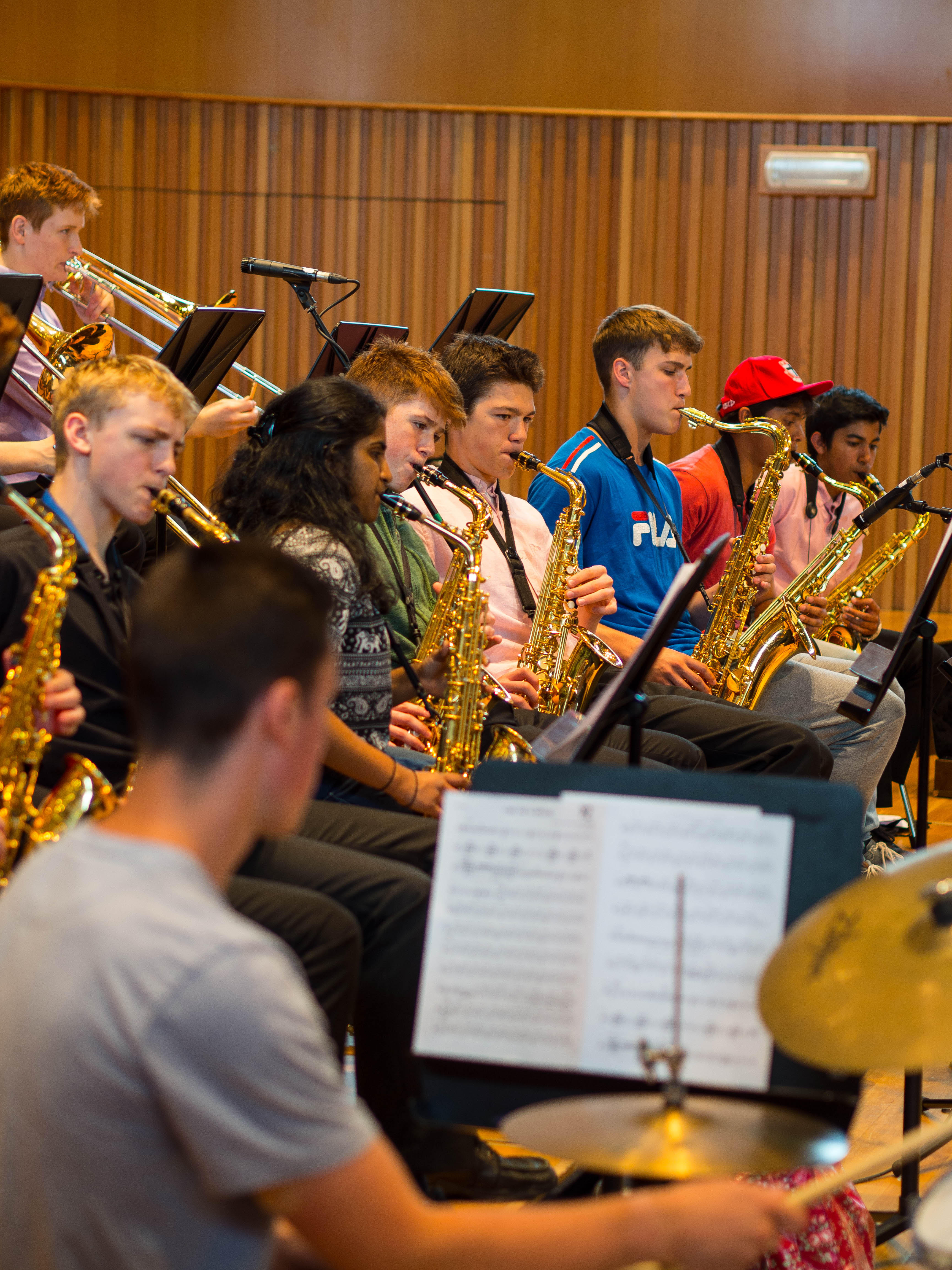
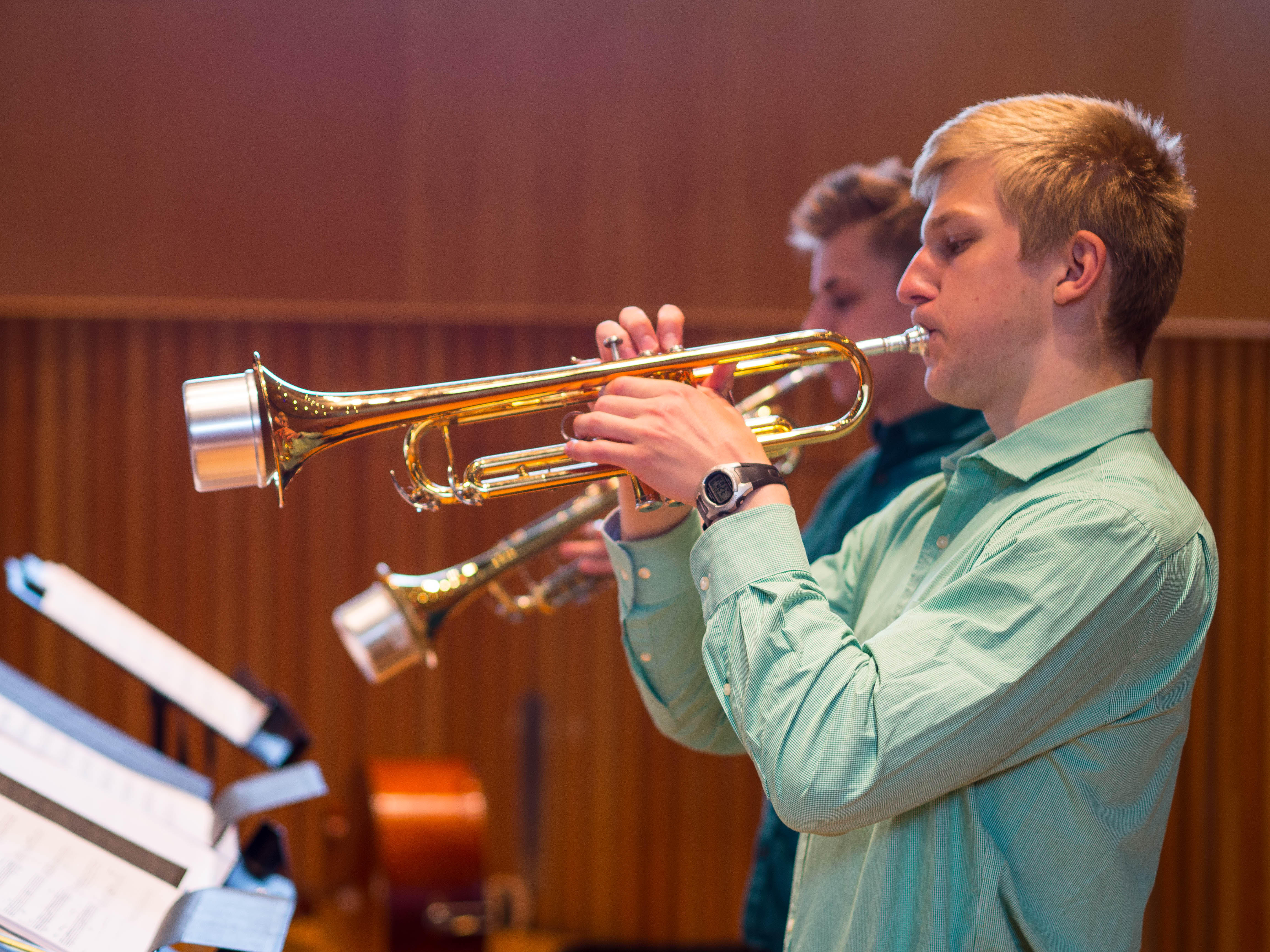
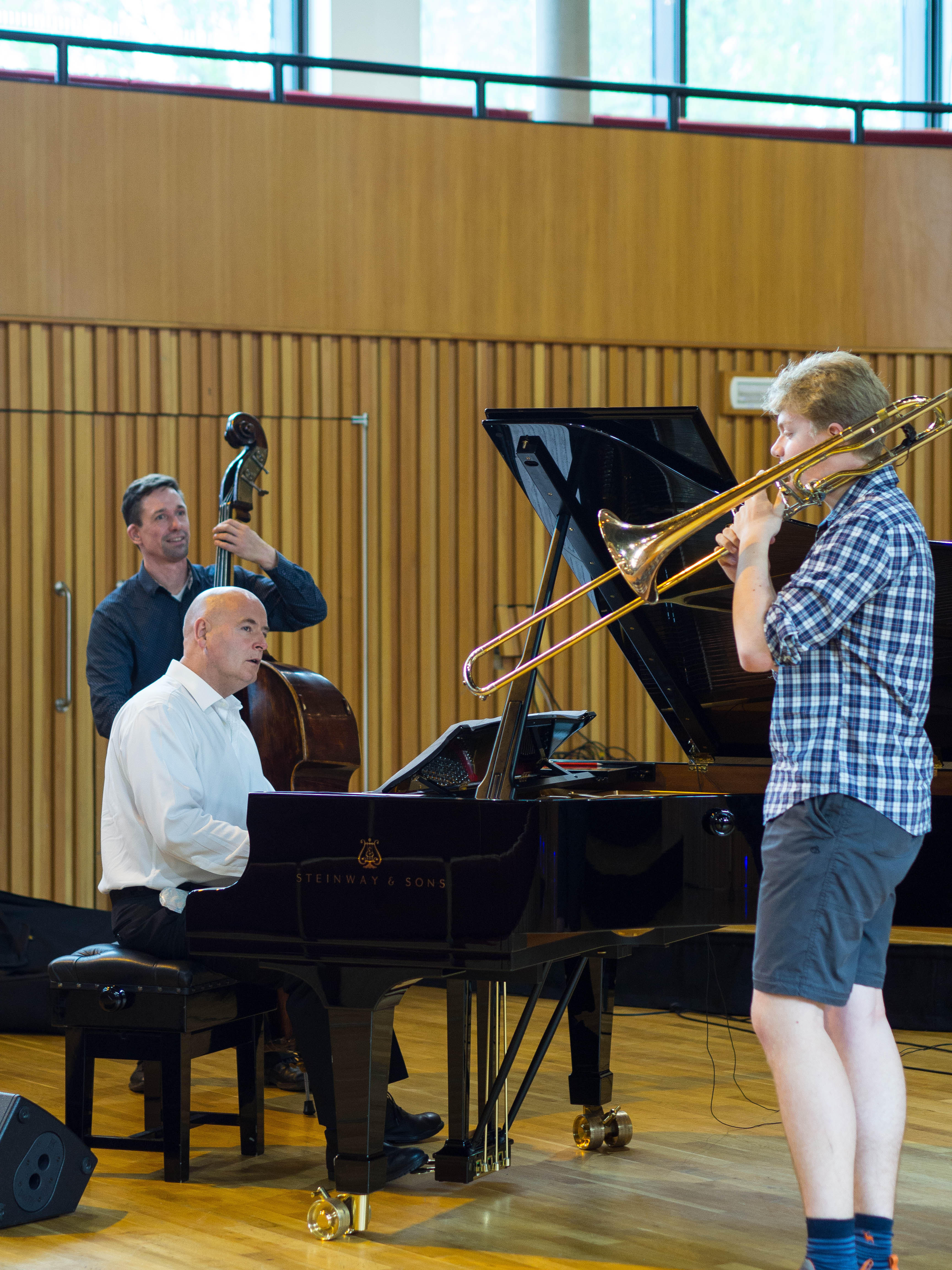
The 2017 Jazz Evening was held on Sunday, 25 June. Senior Swing Band was joined once more by Joe Thompson and Robert Rickenberg for workshops and performances.
An old boy of the school, Joe is house pianist at the Ivy in London, and brought to King Edward’s his characteristic blend of wit and musicianship. You can read more about him at: www.joethompson.london.
Our soloists included Lily Gain, Eva Neville, Molly Thompson, Satish Vaze, Altay Gardiner, Matt Madden, and Nathan Cornish.
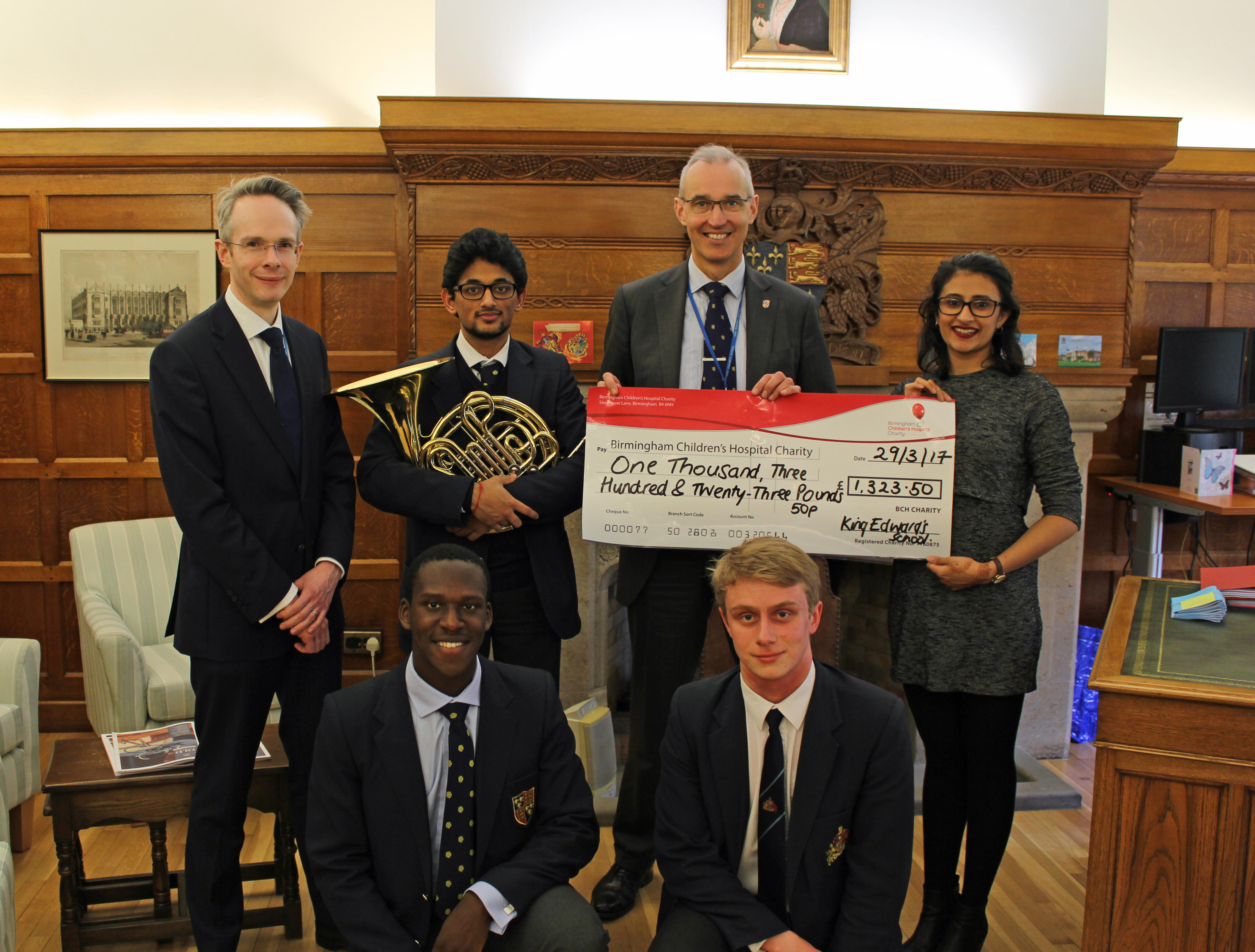
It is a year since our performance of ‘Romany Wood.’ Led by King Edward’s School, this project connected pupils from 15 diverse schools, making it possible for the 800 participating children to perform together on-stage in Birmingham’s Symphony Hall, raising money for Birmingham Children’s Hospital. A cheque for £1323.50 was presented this term by the Chief Master to Tanita Mistry of the hospital, supporting the wonderful work done there.
You can see a gallery of Mr. Ash’s photographs documenting the Romany Wood project here:
http://www.davidashphotography.org/Galleries/King-Edwards/Music/Romany-Wood
Music is, depressingly, becoming less prevalent in the curriculum in this day and age. Yet, contrary to popular belief, I have concluded that the reason for this isn’t the content of the course itself, but the students who choose to take it. Sometimes I struggle to understand how Dr Leigh has the motivation to teach us, let alone spend more time with us than the bare minimum. Yet, through his will and determination, he fearlessly led our ragtag crew into the expanse of the Ruddock Hall on an especially dreary Friday afternoon.
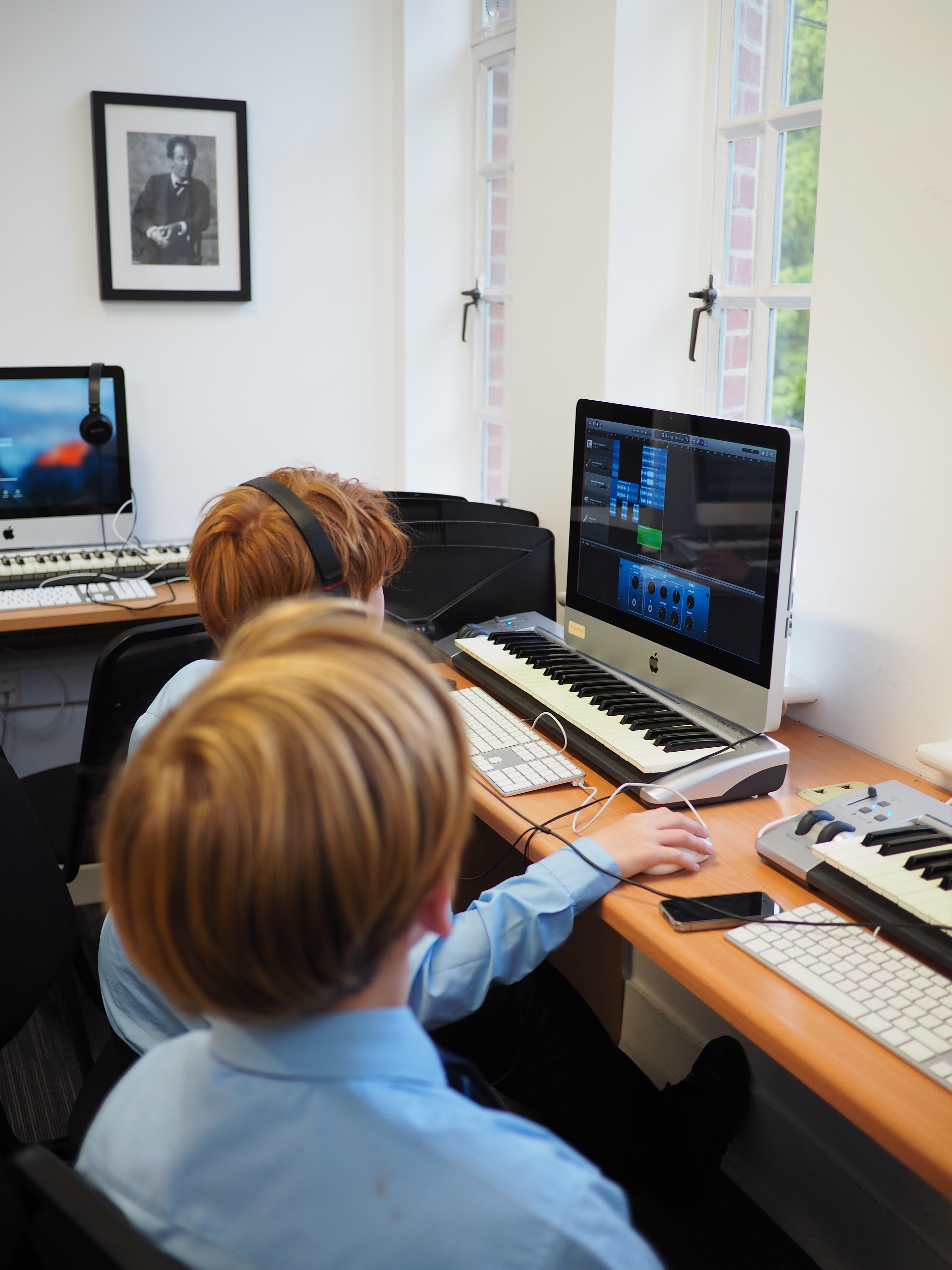
Now, if I am giving the impression of reluctance thus far, I wish to say that this was an especially exciting day, for we were to present our ‘serial’ compositions to a select group of musicians (from City of Birmingham Symphony Orchestra and the Dante Quartet) consisting Shulah Oliver, Zhiko Georgiev, Adam Romer, and Richard Jenkinson), so we could experience our IGCSE compositions realised in full surround-sound audio, contrary to the pained wailing of a so-called ‘violin’ that Sibelius does its utmost to render.
At this point I should mention the nature of serialism (No, not Special K and the like), as I am sure the introduction of this technical language has caught many of you off guard. I believe the art of serialism can be best summarised by a quote from Schoenberg, the founding father of serialism himself:
‘My music is not lovely.’

Unlovely music
In layman’s terms, serialism is designed to sound pretty rubbish. One can go into the joy of retrogrades, rows, combinatoriality, and inversions, but essentially serialism is crafted around a foundation of a twelve-tone scale, and doesn’t follow the conventions of traditional western harmony, resulting in something that sounds a ‘bit dodgy’, to use the words of Jonnie. Yet Schoenburg also said:
‘My work should be judged as it enters the ears and heads of listeners, not as it is described to the eyes of readers.’
So, I humbly concede to the fragility and unreliability of words, and move on to the topic of the music itself. Our class, being as it is, showed serious apprehension to the dea of purposely bad music, however on the realisation that we were able to ‘bung any old note in and they can’t criticise it’, we discovered a newfound glee at the idea of having one fewer thing to think about when composing.

Newfound glee
And so we presented our crisp copies featuring, but not limited to:
“Alas, my teapot has run off with a spoon. (A Lament of Youth)” by Nathan Cornish
“O why does my toenail itch so?” by Isaac Elliot
“No! Layers, Onions have layers!” by Jonnie Green
And prayed that these fine players would be able to work their way around our indiscernible blotches. Thankfully, despite Jonnie’s initial worries that they may not have a full grasp of dotted rhythms, they realised our work with aplomb, and we left feeling fulfilled, enriched, and most definitely tired.
Matthew Igoe, Fifths