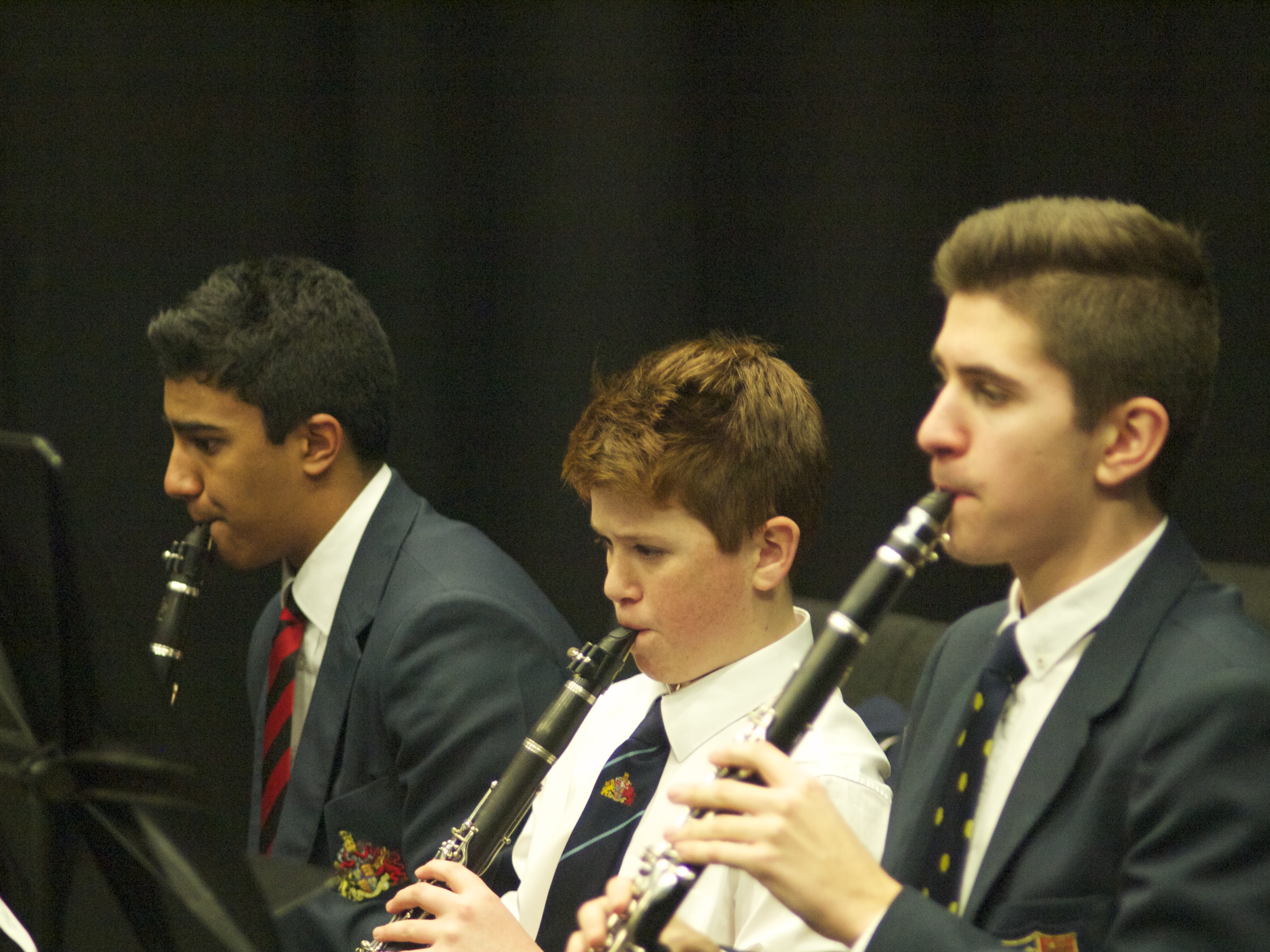
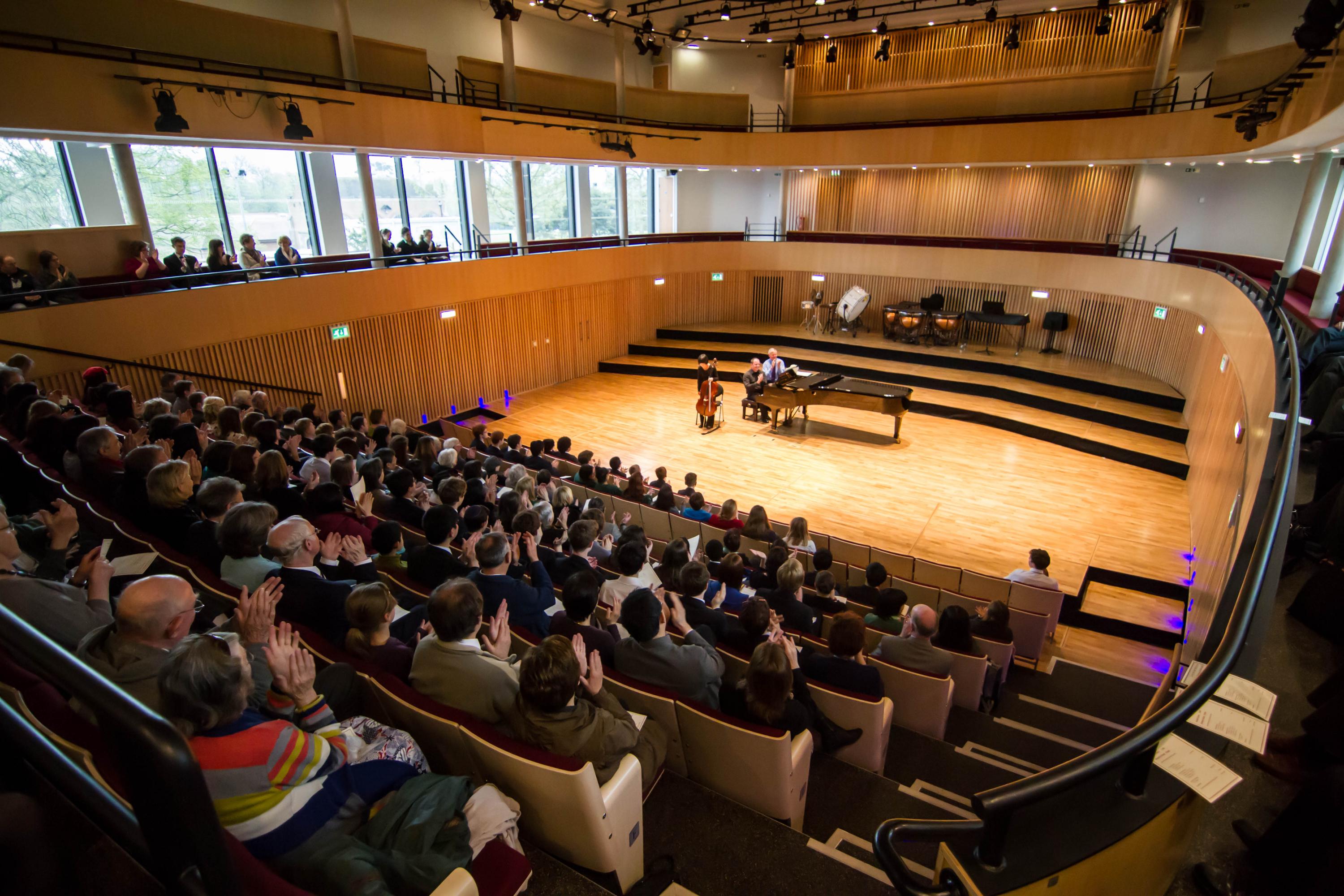
King Edward's Music

Music at King Edward's School, Birmingham

Tag: birmingham

Joe Thompson, Robert Rickenberg, and Senior Swing Band

Joe Thompson at King Edward's School music department, Birmingham
Sunday, 21 June at 1630
Ruddock Performing Arts Centre

An evening of jazz

Joe Thompson, piano
Robert Rickenberg, bass

Hiba Abuelgasim, Kiera Battersby, Harriet Harkcom, Grace Mupanemunda, voice
Nathan Cornish, trombone
Altay Gardiner, saxophone
Teresa Czepiel, violin

Senior Swing Band

Joe is the Musical Director of The Ivy, London, and an old boy of King Edward’s School. You can read more about him at: www.joethompson.london

Music at King Edward's School, Birmingham

The concert is presented jointly with King Edward VI High School for Girls


The sea

The sea – powerful and ferocious, able to wreck even the finest ships and rear up to magnificent heights, but also filled with the most astonishing tranquillity and sublime beauty one could possibly wish for.

Over the years many composers have been fascinated with the sea, and many, including Frank Bridge (1879-1941) and Claude Debussy (1862-1918), felt compelled to compose music depicting this natural phenomenon. This short text will deal with Debussy’s interpretation of the sea in his piece, La Mer.

Debussy’s parents wanted him to join the Navy. He himself was transfixed by the sea, and although he never had the opportunity to become a sailor, his childhood memories of holidays to the sea of Cannes were very vivid.
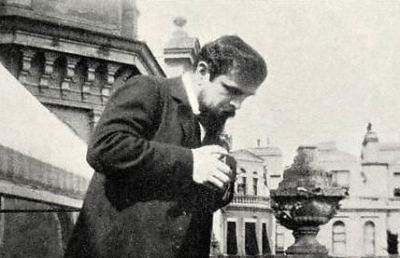
king edward's school, birmingham, music department

Debussy at Eastbourne where he finished La Mer

La mer, trois esquisses symphoniques pour orchestre was started in France in 1903 but finished in the Grand Hotel Eastbourne on the English coast in 1905. The name ‘symphonic sketches’ came about as a result of Debussy’s firm French nationalism. He disliked how the French national traditions were slowly being influenced by German music. Terms such as ‘symphony’ and ‘symphonic poems’ were emerging in Germany, and in order that people would not think that he was adopting these terms, he dubbed his work ‘symphonic sketches’.

The premiere of the piece was in 1905, Paris, where it was played by the Orchestre Lamoureux. Owing to lack of practice from the orchestra and other various personal circumstances concerning Debussy himself, the work was received poorly, but over the next century it became one of Debussy’s most admired and revered works.

The work is divided into three movements:

  1. ‘De l’aube à midi sur la mer’ – très lent – animez peu à peu
  2. ‘Jeux de vagues’ – allegro (dans un rythme très souple)–animé
  3. ‘Dialogue du vent et de la mer’–animé et tumultueux–cédez très légèrement.

Roughly translated, these are:

  1. From dawn to midday on the sea – very slow – little by little become animated
  2. Play of the Waves – allegro (with a very supple rhythm) – animated
  3. Dialogue between wind and waves – animated and tumultuous – very slightly held back
king edward's school, birmingham, music department

The original cover for the full score, inspired by the artist Hokusai

In each movement, Debussy paints very different pictures of the sea throughout the day, and the piece moves forward almost chronologically to mimic this, as if the audience is listening to the sea itself.

From dawn to midday on the sea – The piece begins with a soft and gentle tune, and slowly builds up through a crescendo, achieved partially by more instruments of the orchestra joining, to an emotional climax, surging at points, then holding back as the piece moves on, mimicking the awakening of the sea in the morning. Scalic features are used to evoke the waves, and often include whole-tone scales adding to the mysterious power of the sea and the music. Small fragmented motifs bring out the swelling and subsiding of the waves and the muted strings provide a foundation for the music to be explored. The ever-changing time signatures add to the impression of the unpredictable nature of the sea, and the movement comes to a subdued and quiet end.

Play of the Waves – A contrast with the first section, the second movement begins with the upper strings playfully passing around tremolo crotchets. The wind play long, held notes growing in volume only to drop back to piano, giving the opening an air of insistency and expectation. The movement has a lighter, more percussive texture, with the melody continually being passed from one section of the orchestra to the next, never settling. Much of this section is exposed, and requires virtuoso playing and precision from the string and wind players in order for the full effect of the movement to be realised. One way that Debussy creates the image of waves is by the rapid arpeggios, creating peaks and troughs in the pitch. The music dies away, leading into the third movement.

Dialogue between wind and waves – Tremolo from the percussion gives the opening an insistent and urgent feel. The bass and the ‘cellos take up a short, sharp motif, maybe characterising the waves, very dark and violent. They are subsequently joined by the violas, adding to the drama of the moment. This contrasts with a searching, forlorn melody which appears in the wind section, characterising the wind above the sea. A solo trumpet boldly announces a short tune before sinking back into the ever growing texture. Debussy harnesses the full power of the orchestra, gradually growing unto a triumphant conclusion, with the help of the percussion to portray the sea as powerful and majestic.

music department, king edward's school, birmingham

The Great Wave off the coast at Kanagawa, c1830. From ‘Thirty-six Views of Mount Fuji’ by Hokusai. This inspired the cover of La Mer

This music is typical of Debussy’s writing- a strong sense of atmosphere and mood prevails throughout, but the delivery is subtle, as he paints a picture with a daring and bold palette of impressionistic harmonies and rhythms. The piece’s tonal qualities and interesting orchestration have meant that it has influenced many film scores, delighted many audiences and inspired the next generation of composers, like the sea inspired Debussy.

Gabriel Wong, Fourths

You can see the score of La Mer at IMSLP.

Music at King Edward's School, Birmingham

The sea


This is Claudio Abbado’s celebrated performance of La Mer with the Lucerne Festival Orchestra:

You can see the score of La Mer at IMSLP.

Music at King Edward's School, Birmingham

Performers’ Platform

Music Department at King Edward's School

Tuesday, 9 June at 1830
Ruddock Performing Arts Centre

Kitty Cattell, voice
Bryan Chang, piano
Altay Gardiner, saxophone
Nikhil Handa, accordion
Michel Heneghan, trumpet
Abhinav Jain, piano
Joshua Markman-Morris, guitar
Michael Ollerenshaw, trumpet
Magnus Yap, ‘cello

Works by Chopin, Woods, Brahms, Purcell, and Leroy Anderson.

Music at King Edward's School, Birmingham

This concert is presented jointly with King Edward VI High School for Girls

Charity Concert

Kodaly-Zoltan, Music Department at King Edward's School, Birmingham

Thursday, 7 May at 1305
Ruddock Performing Arts Centre

Gabriel Wong, violin
Eugene Toso and Enoch Cheung, ‘cello
David Millross, viola
Naomi Bazlov, piano
Philip Edwards, violin

works by Gershwin, Vivaldi, Kodály, Paganini, Sarasate, and Liszt.

This concert is in aid of the Nepal Earthquake Appeal, and the National Youth Orchestra, for both of whom there will be a retiring collection. The event is organised by Philip Edwards.

Music at King Edward's School, Birmingham

This recital is presented jointly with King Edward VI High School for Girls


Lunchtime Recital

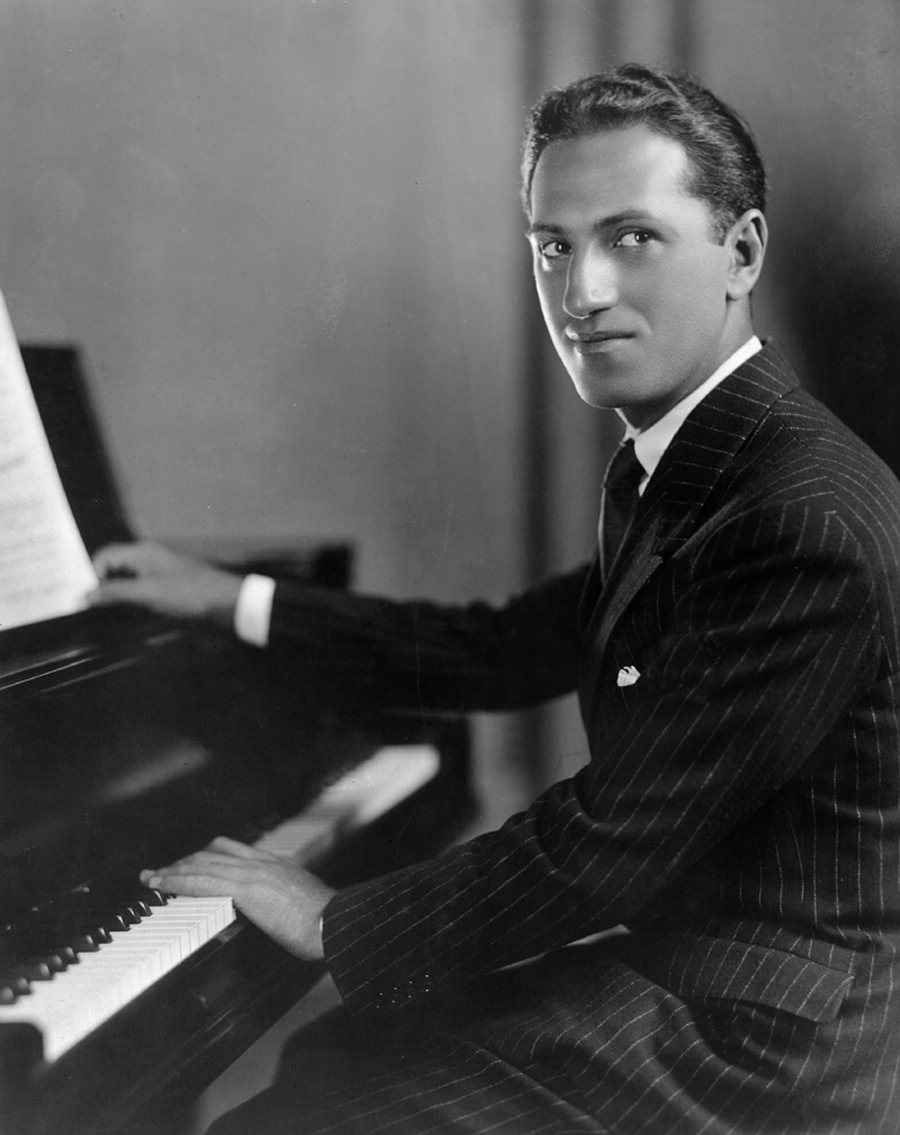
Music department at King Edward's School, Birmingham, George Gershwin

Thursday, 30 April at 1305
Ruddock Performing Arts Centre

Teresa Czepiel, violin
Shivang Shastri, harmonica
Harriet Harkcom, voice

works by Franck, Jacob, Rodgers and Hart, and George and Ira Gershwin

Music at King Edward's School, Birmingham

This recital is presented jointly with King Edward VI High School for Girls


The erhu

Music Department at King Edward's School -- the erhuThe History

The erhu is a two stringed instrument that is over 1000 years old. It evolved from another ancient Chinese instrument the xiqin (奚 琴) that was introduced in China in the 10th century, during the Song Period. It was however in the Dynasties of Yuan (1206-1368), Ming (1368-1644) and Qing (1644-1911) that the erhu developed and grew in popularity. It was most commonly used to accompany local operas. It was first acclaimed as a solo instrument in the 20th century thanks to a man called Liu Tianhua (1895-1932). Now the erhu is one of the most popular instruments in China not only because of its rich history but also because of the prestigious value it has.

The name erhu (二胡) can be split into the two separate figures 二 and 胡. The first figure means ‘two’ in Mandarin and this may be because the instrument has two strings. Another argument is that it is because the erhu is the second highest huqin (胡琴) instrument. However, there is no yihu or sanhu (one and three) so personally I think that the fact it has two strings makes more sense. Also there is a sihu (四胡) which is another huqin instrument with four strings and surprise, surprise, si (四) means four.

The erhu belongs to the huqin family which consists of nine different instruments. The erhu is the most common of all the huqim instruments. Originally, the erhu was played using a rosined stick, however, in around the year 1000, horsehair bows reached China and most of the Asian continent. Thus the instrument that we know came into being.

The Instrument

The erhu is made from a long, vertical piece of wood that has two pegs attached to the top of it. At the bottom a sound box that is either an eight-sided or six-sided prism, covered by a python skin. Two strings tuned to a D4 and A4 are strung from the base to the pegs. The bow, normally made of horsehair, is never separated from the strings and is instead placed in-between the two. There is no fingerboard and are no frets.

The erhu is held upright on the performer’s leg, with the left hand holding it at the top and the right hand controlling the bow. Although there is a screw to vary the bow tension, the tautness of the bow is determined by the pressure of the right hand. This allows a great range of effects, from a very wispy, airy sound to a harsh, sharp sound.

The two strings were originally made from silk. However, this meant the sound wasn’t very loud and so now they are made from metal, mainly steel. The two strings are tuned a fifth apart and normally a D4 and an A4, the same as the middle two strings on a violin. In fact the erhu is sometimes referred to as the ‘Chinese violin’ as the principles are the same and in the Eastern orchestras the erhu has the same role as the violin in a western orchestra

The Music

The erhu has a weird and wonderful sound. It resembles the human voice and can also imitate many natural sounds, animals for example. It is a very expressive instrument that normally plays melancholy and melodic pieces. However it is also appropriate for more jovial and light-hearted pieces. There have been many great erhu players throughout history but one, by the name of Abing (Full name: Huà Yànjūn 华彦钧) really stands out from the crowd.

Abing (17 August 1893-4 December 1950) was a blind erhu player. He was an exceptional erhu performer, not only because he was blind but because also incorporated topical issues into his music. As well as playing the erhu he also composed many different prestigious pieces which are known throughout China (a particularly famous example is Erquan Yingyue 二泉映月 which means the Moon reflected in the Er-Quan). His pieces for erhu and pipa have become compulsory for every learner and he is widely acclaimed as the best erhu player of the 20th century. It is thanks to Abing that we have such wonderful pieces on the erhu and I think he is the one who developed the understanding and characteristics of the erhu the most.

Zhangqu Chen
Upper Middles

Music at King Edward's School, Birmingham

The erhu — selected videos

Moon Reflected on Erquan Pond, an erhu solo by Zhou Wei

http://www.youtube.com/watch?v=L_K54nEqfSo

The erhu explained:

The Ballad of North Henan Province 豫北叙事曲:

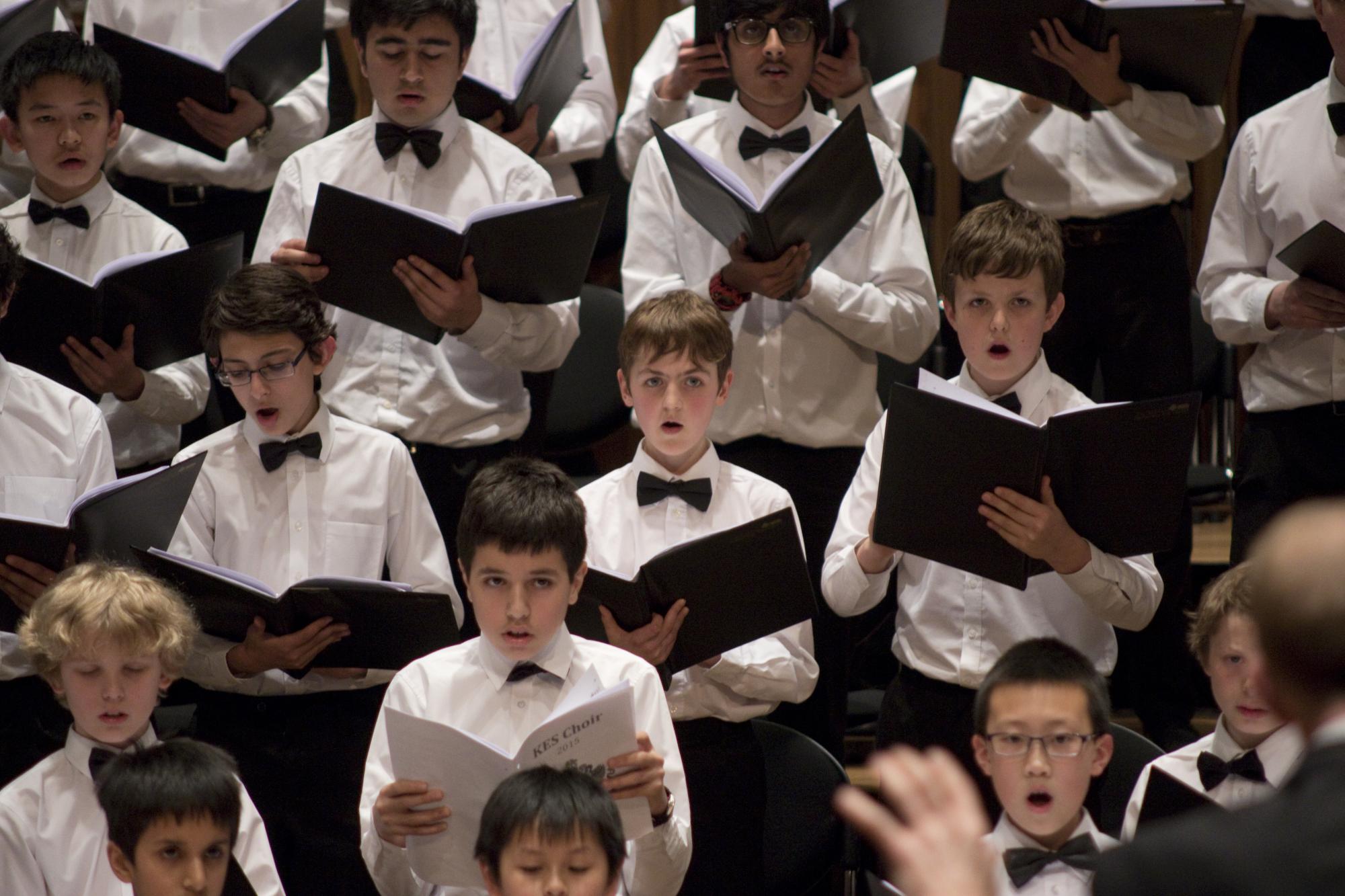
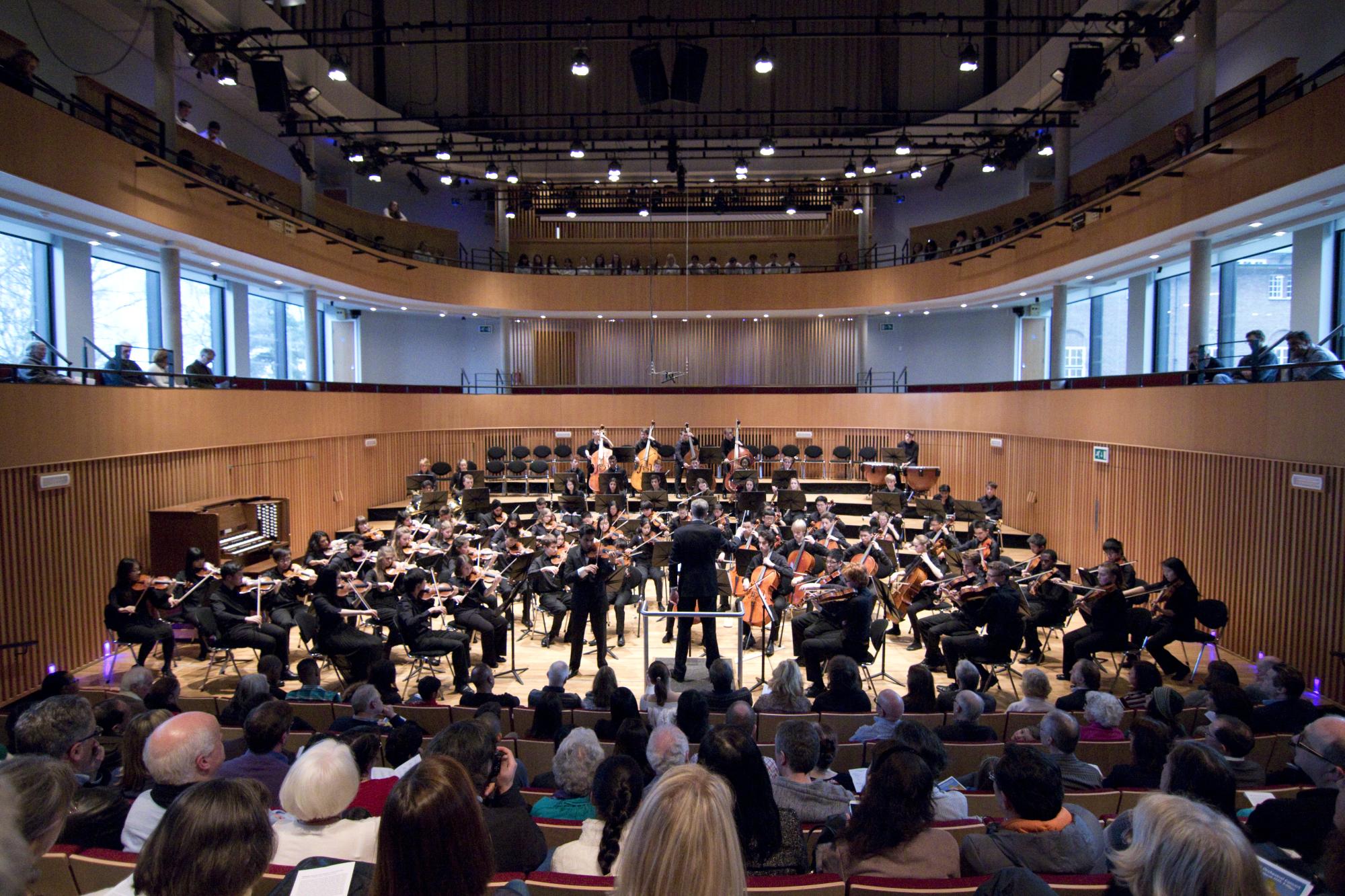
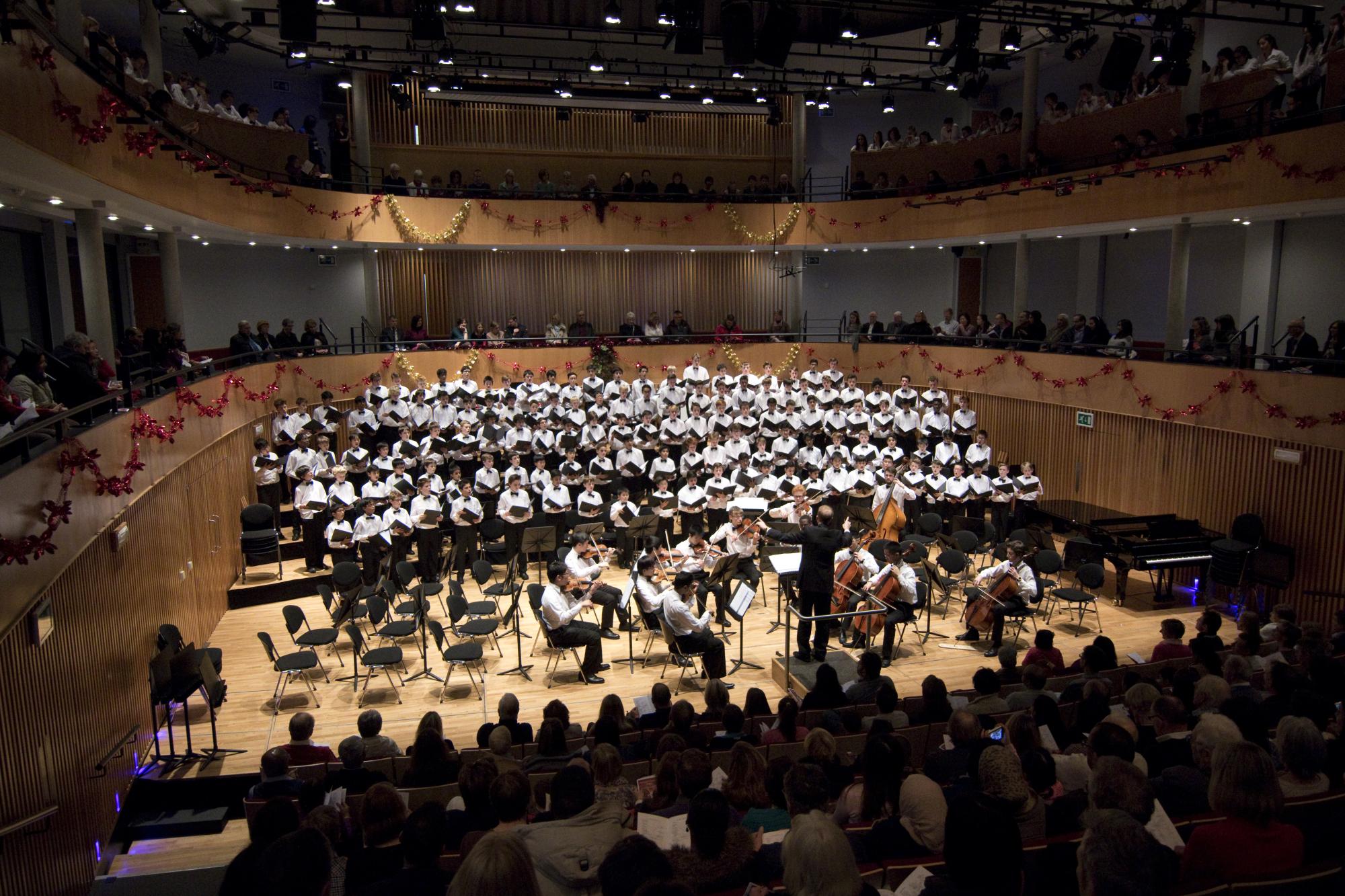
From the Choral and Orchestral Concerts

King Edward's School, Birmingham, KES ChoirKing Edward's School Symphony Orchestra

Our thanks to Mr. Boardman for the photographs.

Music at King Edward's School, Birmingham

The concert is presented jointly with King Edward VI High School for Girls


Charity Concert

King Edward's School, music department

Tuesday,  24 March at 1930
Ruddock Performing Arts Centre

Mozart: Vesperae solennes de confessore KV339
works by Bryant and Bryant, Garner, McCabe, Tizol, and Corea.

KES/KEHS Choral Society
KES/KEHS Senior Swing Band

Supporting South Birmingham Young Homeless Project


Music at King Edward's School, Birmingham

The concert is presented jointly with King Edward VI High School for Girls


Choral and Orchestral Concert


King Edward's School, Birmingham, Choir

Monday,  9 March at 1930
Ruddock Performing Arts Centre

Bernstein: Chichester Psalms
Dvořák: Symphony no.7 in D minor op.70

KES Choir
KES/KEHS Symphony Orchestra

Music at King Edward's School, Birmingham

The concert is presented jointly with King Edward VI High School for Girls


Choral and Orchestral Concert


Music at King Edward's School, Birmingham

Sunday,  8 March at 1500
Ruddock Performing Arts Centre

Mozart: Vesperae solennes de confessore KV339
Tchaikovsky: Violin Concerto in D major op.35

Arpan Sharma, violin
KES/KEHS Choral Society
KES/KEHS Symphony Orchestra

Music at King Edward's School, Birmingham

The concert is presented jointly with King Edward VI High School for Girls


The woodwind section in rehearsal

King Edward's School, music department

In preparation of the Choral and Orchestral Concerts, the KES/KEHS Symphony Orchestra woodwind rehearsed last week under the guidance of Margaret Cookhorn, principal contrabassoonist of the CBSO.


Music at King Edward's School, Birmingham

Lunchtime Recital

Music at King Edward's School, Birmingham

Thursday, 5 March at 1305
Ruddock Performing Arts Centre

Isabel Russell, ‘cello
Naomi Bazlov, piano
Beth Zheng, violin

works by Fauré, Brahms, Boccherini, Bach, Rachmaninov, and Mendelssohn

Music at King Edward's School, Birmingham

This recital is presented jointly with King Edward VI High School for Girls


Some advice from Itzhak Perlman

‘Practise slowly…’

Music at King Edward's School, Birmingham

Shostakovich uncovered, a trip to Symphony Hall

Music at King Edward's School, Shostakovich

Wednesday, 11 February at 1930
Symphony Hall, Birmingham

Shostakovich Uncovered

Paul Rissmann, presenter
City of Birmingham Symphony Orchestra
Andris Nelsons, conductor

More of Paul Rissmann’s listening guides are to be found here.

Music at King Edward's School, Birmingham